
Advanced materials, smarter monitoring, and tighter supplier partnerships are transforming wear management in modern crushing operations.
by Jonathan Rowland
Wear is an unavoidable reality. As WearKraft’s Troy Hartman puts it, “by the simple nature of what we do in our industry, wear is inevitable.” It is not, however, unmanageable. Indeed, rising production targets and tightening maintenance resources make effective wear management a priority in modern mining operations, while the consequences of getting it wrong are significant.
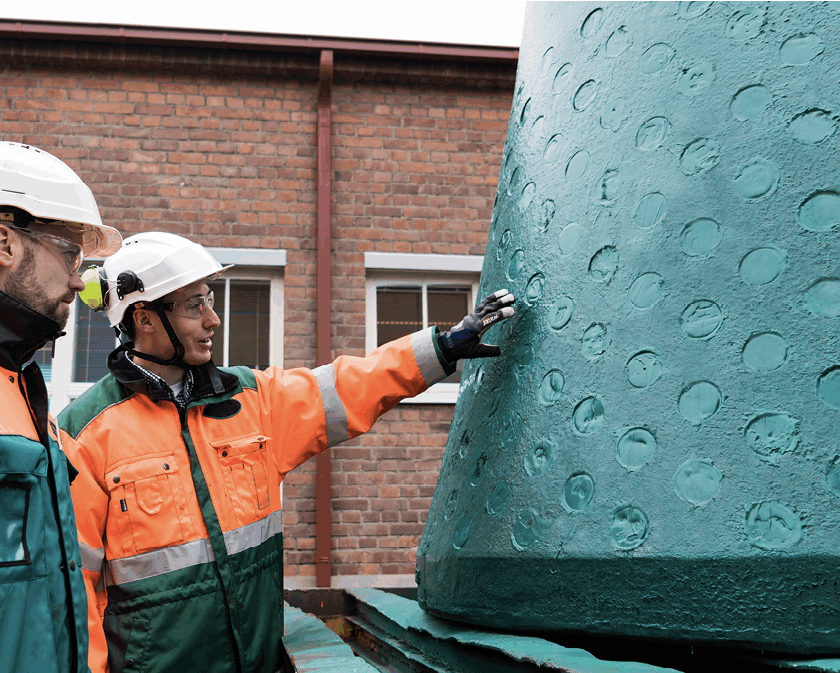
THE WEAR CHALLENGE: A LESSON IN COMPLEXITY
The material being processed sets the baseline for everything that follows. Abrasiveness, hardness, and toughness each determine how quickly components deteriorate, but these properties are rarely static. As mines develop and expand, feed material can vary significantly in both gradation and material properties, noted Metso’s Stuart Baillie. “Without proper monitoring, these variations can produce unpredictable wear profiles and inconsistent changeout schedules,” he warned, “ultimately increasing the risk of unplanned downtime.”
Selecting the right equipment for the application is equally critical, as Hartman pointed out. A crusher that is too small will be overworked, accelerating wear and reducing productivity. At the same time, an oversized machine may produce inconsistent results and unbalanced liner wear through trickle feeding. However, even with the appropriate machine in place, wear performance is strongly influenced by the crushing chamber’s configuration and operation.
According to FLS’s Dale McLean, premature liner wear is often the result of a mismatch between chamber geometry, liner profile, and site-specific ore characteristics. A common manifestation is highly localized wear caused by an inappropriate nip angle, in which material slips and recirculates rather than undergoing controlled compressive crushing.
“This ‘boiling’ effect increases material residence time in specific regions of the chamber, creating persistent high-stress zones that accelerate liner degradation well beyond expected wear rates,” Neitemeier explained. Non-uniform compression distribution within the crushing chamber compounds this challenge. For example, in cone crushers, an imbalance between the compression zones leads to uneven force distribution, increased wear in high-compression regions, unstable power draw, and reduced overall crushing efficiency.
Selecting the correct chamber from the outset is key, emphasized Columbia Steel’s Steve Dolezal. Three basic crushing chambers are available: fine, medium and coarse. Each has distinct reduction ratios: 4:1, 6:1 and 8:1, respectively. “When correctly choosing the initial profile, one needs to consider the reduction rate,” he explained, adding that once liners have been run, analyzing the worn profiles is essential to making further adjustments and improvements.
Material selection adds a final element of complexity. Manganese steel liners – still the industry standard for crusher wear parts since Sir Robert Hadfield introduced the alloy in 1882 – rely on sufficient impact energy to work-harden and achieve their intended wear resistance. However, when feed material is too soft or excessively fine, this hardening mechanism may not be triggered, leading to accelerated wear that can be misdiagnosed as a material quality issue rather than an application mismatch.
Liner wear is thus not an isolated consumables problem. As McLean’s FLS colleague, Ingo Neitemeier, put it: “It is a system-level outcome influenced by chamber design, operating strategy, and material behavior.” Addressing the issue thus means moving beyond reactive liner replacement toward an integrated approach that aligns crushing geometry, operating parameters, and material selection with the specific realities of each orebody.
IT STARTS AT THE FOUNDRY: MATERIALS AND METALLURGY
According to McLean, the most effective advances in extending wear part life begin at the foundry. “Without disciplined control of grain structure, microstructural uniformity, alloy chemistry, and casting quality, even the most advanced liner designs or materials will fail to deliver consistent results in the field.”
While manganese steel remains foundational for crusher wear parts, the alloy itself has evolved since Hadfield’s original formulation, as crushers have become more efficient and their crushing dynamics have changed.
Today, controlled heating and quenching cycles are engineered with precision, resulting in more consistent hardness, greater structural stability, and improved wear resistance.
Additional alloying elements have been incorporated to strengthen the microstructure, enhance toughness, reduce brittleness, and increase crack resistance.
Columbia Steel’s Dolezal also highlighted metallurgy’s significance, noting that manganese grade selection is an important lever for extending service life. “Depending on the application and type of material being crushed, the grade of manganese can offer significant increases in service life,” he noted. With harder materials such as granite, a premium-grade manganese (18-24% Mn) can deliver up to 15% improvement in wear life. In some cases, adding alloy steel or titanium carbide inserts cast into the part can further increase service life.
Beyond manganese development is the evolution of high-chrome white iron for primary gyratory crusher concaves. Metso’s Baillie describes this as “a game changer,” with wear-life improvements of up to 300% over standard manganese in suitable applications, reaching more than 500% when combined with profile optimization. Metso has also developed what it terms hybrid solutions through its MX product family, combining advanced materials with optimized liner geometry. In primary crusher mantles, MX technology can “deliver up to double the wear life, while in downstream cone crushers, improvements in the range of 80-100% have been achieved across the crushing chamber as a whole.”
Meanwhile, FLS’s Metal Matrix Composite (MMC) technology combines hard, wear-resistant particles with a tougher metallic base, typically by embedding carbides (such as titanium carbide) in steel alloys. This changes the wear mechanism to resist abrasion while maintaining the impact tolerance required for heavy-duty crushing. According to Ingo Neitemeier, MMC often achieves up to twice the service life of conventional manganese steel. Next-generation designs incorporate full-surface, ultra-wear-resistant carbide inlays in gyratory crusher concaves and have been “proven in some of the world’s largest copper operations where extreme throughput and hard ore place exceptional demands on liner systems.”
A critical characteristic of the MMC approach, Neitemeier continued, is selectivity. Rather than over-engineering entire liners, carbide inlays can be strategically placed in the chamber’s highest wear zones. “This targeted reinforcement delivers a superior cost-to-benefit ratio, maximizing wear life in the areas it matters most, while controlling overall material usage, manufacturing complexity, and cost.”
Materials advances do not tell the full story, however. The greatest gains come from combining metallurgical improvements with chamber optimization. For example, both Metso and FLS use simulation software, such as Discrete Element Method simulations, and rock-testing data to optimize chamber design and material selection. These advances represent a “broader shift toward application-specific, data-driven wear solutions, where metallurgy, design, and operating reality are aligned,” concludes McLean. “This integrated approach has become one of the most effective and proven pathways to extending wear part life.”
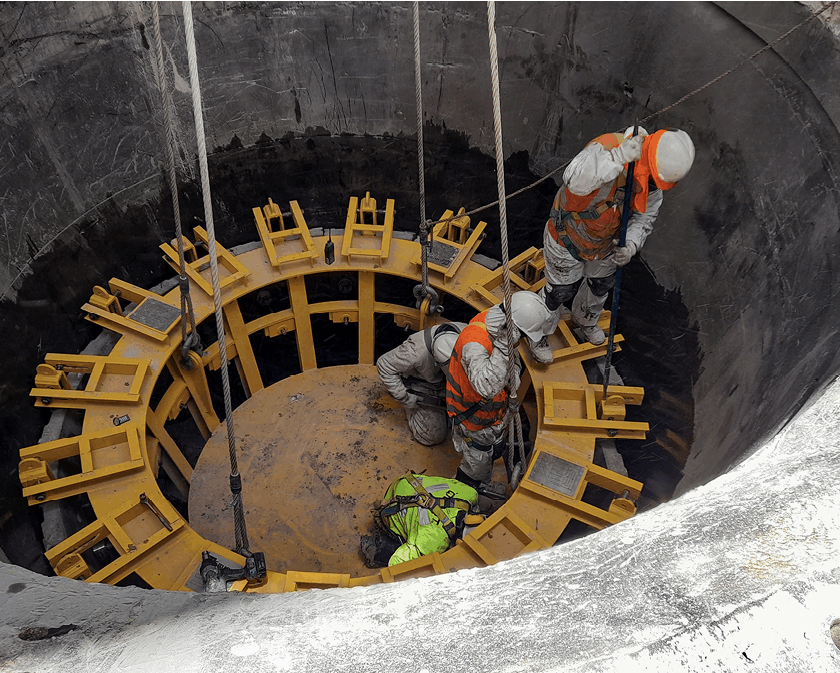
YOU CANNOT CONTROL WHAT YOU DO NOT MEASURE
Knowing when to replace wear parts is as important as selecting the right ones in the first place. Go too early, and you sacrifice usable liner life; wait too long, and you risk performance degradation, mechanical damage, and unplanned downtime. Getting this balance right requires moving beyond guesswork toward structured inspection and data-driven decision-making.
For cone crushers, operators should monitor the vertical adjustment range, amperage draw, and throughput, said Columbia Steel’s Dolezal. “Typically, when the throughput drops, the liners are removed so that a new set can be installed to bring the machine back up to full production,” he explained. Profiling these used liners after removal enables a full analysis to determine whether there is room for improvement in the next wear cycle.
WearKraft’s Hartman echoed the value of routine inspection, noting that most crusher manufacturers recommend daily checks for good reason. Routine checks enable operators to identify potential issues early, such as worn or cracked liners, uneven wear patterns, or signs of feed or operational imbalance. That said, there is a compelling case for the role digital tools can play when deployed effectively.
Although fixed replacement intervals are simple to administer, they often result in either premature liner changes or extended operation beyond optimal performance windows.
Leading operations, FLS’s Neitemeier argued, are increasingly shifting from time-based liner replacement strategies to condition-based, data-driven decision-making.
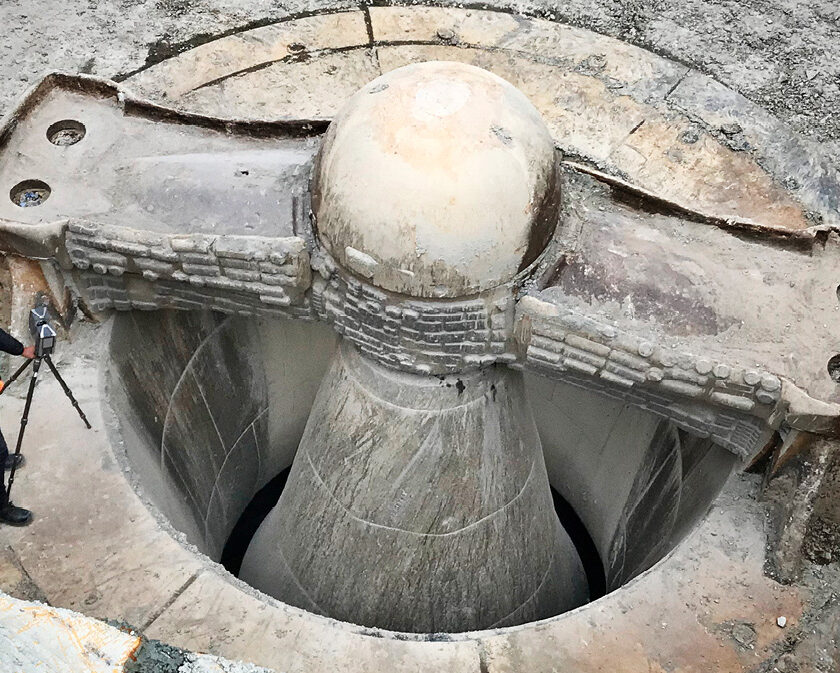
At the foundation of a condition-based approach is consistent machine data, enabled by technological advances in monitoring, such as wear sensors, temperature and pressure monitoring systems, vibration analysis, and remote performance-tracking tools. For example, high-resolution 3D liner scanning, combined with structured wear analysis, allows operators to track wear rates over time, detect abnormal wear patterns early, and accurately forecast remaining liner life.
“This trending data allows both the OEM and the end user to be clear on reline schedules and to plan ahead for the best use of the labor at the optimum time,” said Metso’s Baillie. Real-time particle size analysis (PSA) at the feed and discharge can provide further continuous insight into reduction ratios and crushing efficiency, added Neitemeier, helping to minimize unnecessary closed-side setting adjustments that can otherwise drive avoidable downtime and accelerated wear.
When wear data, simulation insights, and real-time operating measurements are integrated, operators can proactively manage crusher loading rather than react to failures, concluded Neitemeier. The result is longer liner life, improved mechanical stability, fewer unplanned shutdowns, and more predictable crusher performance: essential outcomes as mines push for higher utilization and lower unit costs.
That said, technology has its limits, concluded Hartman, emphasizing the continued importance of human insight. “There is no substitute for boots-on-the-ground inspection,” he insisted. “Don’t forget that good old-fashioned detective work, guided by human experience, intuition, and the five senses, remains one of the most valuable maintenance tools in any operation.”
THE ART AND SCIENCE OF INVENTORY PLANNING
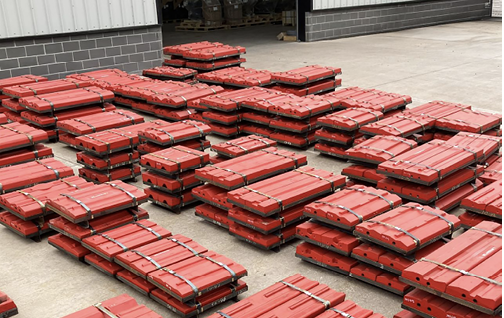
Having the right parts available at the right time is fundamental to avoiding unplanned downtime. Yet, it is often treated as an afterthought rather than an integral part of the wear management process. Columbia Steel’s Dolezal offered a straightforward starting point: know your service cycle and maintain at least one or two sets of parts in inventory. Lead times from the supplier should be a major consideration in stock-keeping decisions, as longer lead times require greater buffer inventory.
Accurate record-keeping is the foundation of effective planning, agreed WearKraft’s Hartman. Tracking wear part installation dates, daily or weekly production tonnages, crusher settings, and hour-meter readings builds a meaningful predictive program that reduces surprises. He also highlighted that changes in feed material characteristics, such as moisture content, clay content, or increased fines, can significantly affect wear rates and should be factored into any planning model.
Both Metso and FLS emphasized the value of treating inventory planning as an extension of the broader wear strategy rather than a standalone supply chain exercise. For Metso’s Baillie, a close relationship with the wear parts supplier is key, and effective wear reporting enables both parties to ensure inventory remains relevant. As material grades and liner profiles evolve through ongoing chamber optimization, older compounds can be phased out and new materials introduced into the stock cycle, avoiding obsolete inventory on either side of the relationship.
FLS’s McLean also advocated collaborative planning with the OEM, aligning maintenance schedules, throughput forecasts, and historical wear rates with actual consumption patterns. “By evaluating component criticality, replacement lead times, and wear-life variability, operations can determine the optimal mix of onsite stock, consignment programs, and supplier-held inventory. This minimizes operational risk while avoiding excessive working capital tied up in rarely used parts,” said the FLS expert.
“When you find a supplier that delivers consistent high-quality wear parts, understands the nuances of your application, and proactively supports you by keeping the right inventory on the ground and ready when you need it,” concluded Hartman, “the difference will be clear, and at least some of the burden can be lifted from the mine manager.”
WEAR MANAGEMENT IN COAL CRUSHING APPLICATIONS
Coal crushing presents distinct wear challenges, shaped by the material’s properties and the equipment commonly used in coal preparation. Geordie Edmiston, global product manager at McLanahan, identifies two primary concerns: ensuring proper feeding of the crusher to create even wear across the width of the rolls, thereby maximizing the longevity of crushing elements; and maintaining a robust preventive maintenance program that provides sufficient lead time to have a complete set of spare parts on order and ready for scheduled changeouts.
On the materials side, Edmiston points to the development, in collaboration with a key supplier, of a proprietary line of tungsten carbide-impregnated crushing teeth. This technology has delivered wear-life improvements of three to four times those of standard metallurgy, substantially extending crusher availability and improving customer throughput between maintenance outages.
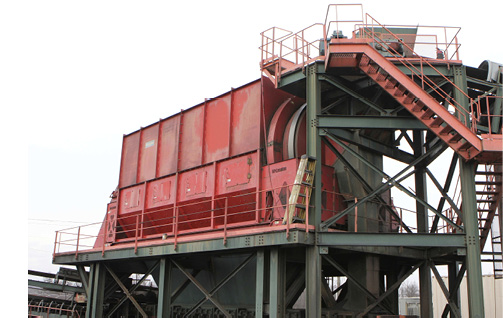
For monitoring, McLanahan provides operators with a tooth template alongside the crusher, enabling straightforward physical measurement of tooth wear over time. This practical approach allows operations to track degradation and initiate parts orders well in advance of the required changeout, making it a simple yet effective tool for avoiding unplanned downtime. Scheduled maintenance inspection intervals are outlined in equipment manuals, providing a structured framework for ongoing wear monitoring.
Finally, on inventory, Edmiston suggests customers hold a complete set of wear parts – crushing segments, liners, or rotable rolls – onsite. While acknowledging that this is not always practical, he emphasized that a disciplined inspection and monitoring program becomes even more critical when full spare sets cannot be maintained.
THE ROAD AHEAD
The future of wear management in crushing applications will feature a shift toward longer-lasting, more targeted solutions that deliver performance gains while reducing the environmental footprint of crushing operations. What is notable about this shift is the alignment of sustainability and operational efficiency – and how that alignment is reshaping how the industry thinks about wear protection. For WearKraft’s Hartman, the change in conversation is striking. “Extending service life is no longer just about reducing downtime or boosting operational efficiency,” he observed. “It has become a critical strategy for conserving resources and protecting the environment.”
At WearKraft, the acknowledgment that “we only have one planet” has shaped how the company engineers its products, Hartman continued. “We continually design, test, and refine new high-performance alloys, recycle production materials, and develop wear parts that deliver maximum utilization throughout their lifecycle. Meanwhile, across our industry, the integration of technologies such as ceramics, carbides, and titanium has helped double wear resistance and the overall lifespan of wear parts in many cases.”
Metso’s Baillie also frames sustainability as a core design criterion. The MX family of hybrid liner products, for example, is part of the Metso Plus offering, which requires products to meet strict sustainability criteria, including demonstrating a longer lifetime than industry benchmarks.
The logic is straightforward: liners that last twice as long mean half as many liners are manufactured, shipped, and eventually scrapped.
Meanwhile, Metso’s Chamber Optimization service, also part of the Metso Plus portfolio, has demonstrated energy reductions of up to 30% – a significant sustainability benefit in energy-intensive comminution circuits. Finally, the company’s Poly-Cer protective wears have demonstrated wear-life improvements of up to three to six times compared to conventional steel liners. Looking ahead, the company plans to expand its protective wear offering in 2026 to cover a wider range of applications.
Future competitive advantage lies “in developing materials that deliver greater wear resistance while maintaining reliability, structural integrity, and predictable performance,” concluded FLS’s Neitemeier. “Next-generation wear solutions, such as MMC, are therefore focused on targeted reinforcement and advanced material systems that maximize wear life where it is needed most. When combined with simulation-driven design and digital monitoring, these technologies promote uniform, predictable wear patterns and extended service intervals with lower overall material consumption.”
Taken together, the picture is of an industry transforming its approach to wear. The era of reactive liner replacement based on fixed schedules or simple visual inspection is giving way to a more sophisticated model: one that integrates advanced materials science, application-specific chamber design, digital monitoring, and collaborative supplier relationships into a unified wear management strategy. The goal is to align every element of the crushing system with the specific demands of the orebody, the circuit, and increasingly, the planet.
MEET THE PANEL
Stuart Baillie is senior manager, Crusher Wear Solutions, at Metso.
Steve Dolezal is product engineering manager for Jaw & Cone Crusher at Columbia Steel.
Troy Hartman is sales manager at WearKraft.
Ingo Neitemeier is global service line manager, Gyratory Crushing Consumables, at FLS.
Dale McLean is global service line manager, Cone & Jaw Crushing Consumables, at FLS.